
Using Dyne Testing in Pad Printing: A Practical Guide to Surface Energy Control
In pad printing, many print quality issues — poor adhesion, incomplete ink transfer, or inconsistent results — are often traced back to one root cause: insufficient surface energy of the substrate.
Because surface conditions cannot be evaluated visually, dyne testing provides a simple and practical method to verify whether a product surface is ready for printing before production begins.
Why Surface Energy Matters in Pad Printing
Pad printing transfers a very thin ink layer onto a surface. For successful transfer, the ink must wet the substrate evenly.
If surface energy is too low:
- ink contracts instead of spreading,
- edges become irregular,
- adhesion weakens,
- prints may fail during handling or further processing.
Testing surface energy allows operators to identify this risk before running parts through the machine.
How to Perform a Dyne Test
The dyne test is designed to be quick and repeatable directly on the production floor.
Basic procedure:
- Ensure the surface is clean and free from dust, oil, or release agents.
- Apply a small line or drop of test liquid onto the material using a brush or applicator.
- Observe the behavior of the liquid for several seconds.
Evaluation:
- If the liquid forms a continuous film and remains stable → surface energy is sufficient.
- If the liquid retracts into droplets or breaks apart → surface energy is too low.
Testing should always be performed on representative parts and ideally repeated at multiple locations.
How to Choose the Correct Dyne Level
Dyne test liquids are available in different levels, each representing a specific surface energy value. The correct level is not arbitrary — it is determined by the ink system and process requirements.
In practice:
- Start testing with a mid-range value recommended for the ink.
- If the liquid spreads easily, test with a higher level.
- If it retracts, move to a lower level.
The goal is to identify the highest value that still wets the surface consistently. This becomes a practical reference point for process acceptance.
Ink suppliers or internal validation trials typically define the minimum surface energy required for stable adhesion.
When to Perform Dyne Testing
Dyne testing is most effective when integrated into routine process control:
- during initial job setup,
- after material batch changes,
- following cleaning or coating processes,
- before and after surface pre-treatment,
- during troubleshooting of adhesion issues.
Regular testing helps prevent unexpected print failures and reduces setup time.
Improving Results with Surface Pre-Treatment
If testing shows insufficient wettability, surface activation methods such as corona treatment can increase surface energy and improve ink behavior.
After treatment, repeating the dyne test confirms whether the required surface condition has been achieved before printing resumes.
Turning a Simple Test into Process Control
Dyne testing transforms an invisible material property into a measurable and controllable parameter. By applying it consistently, pad printing operators can move from reactive troubleshooting to proactive process control — achieving stable ink wetting, reliable adhesion, and repeatable print quality.
Stay with us to learn more about common operator mistakes during dyne testing — and how to avoid them to ensure consistent and reliable pad printing results.


Support Your Pad Printing Process with Proven Consumables

High-quality silicone pads designed for accurate ink transfer, even on complex or curved surfaces.
Multiple shapes, sizes, and hardness levels
Excellent ink release and durability
Suitable for fine details and challenging geometries

Precision plates for sharp image reproduction and long service life.
Steel and polymer plates
Laser engraving for precise detail and consistent depth
Stable quality for repeatable results
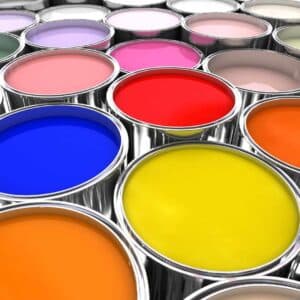
Industrial inks developed for long production runs and excellent adhesion.
Solvent-based, UV, and specialty inks
Suitable for plastic, metal, glass, silicone, and coated surfaces
Custom color matching (Pantone, RAL, CMYK)

Supporting products that keep your production efficient and clean.
Solvents, mixing cups, gloves, and tools
Designed for stable workflows and reduced downtime
Optimized for industrial environments


